Home
The kitchen as an entertaining command center: layout, light, and flow that scale
The best kitchens for real life are not the ones that look perfect in a magazine spread once a year. They are the ones that switch modes from Tuesday pasta to a Saturday dinner for eight without a full remodel of your habits. This guide is about the invisible architecture of hosting: work triangles that can expand, lighting layers that flatter people and food, and surface discipline that keeps the room calm when it gets busy.
The three “stations” you actually use
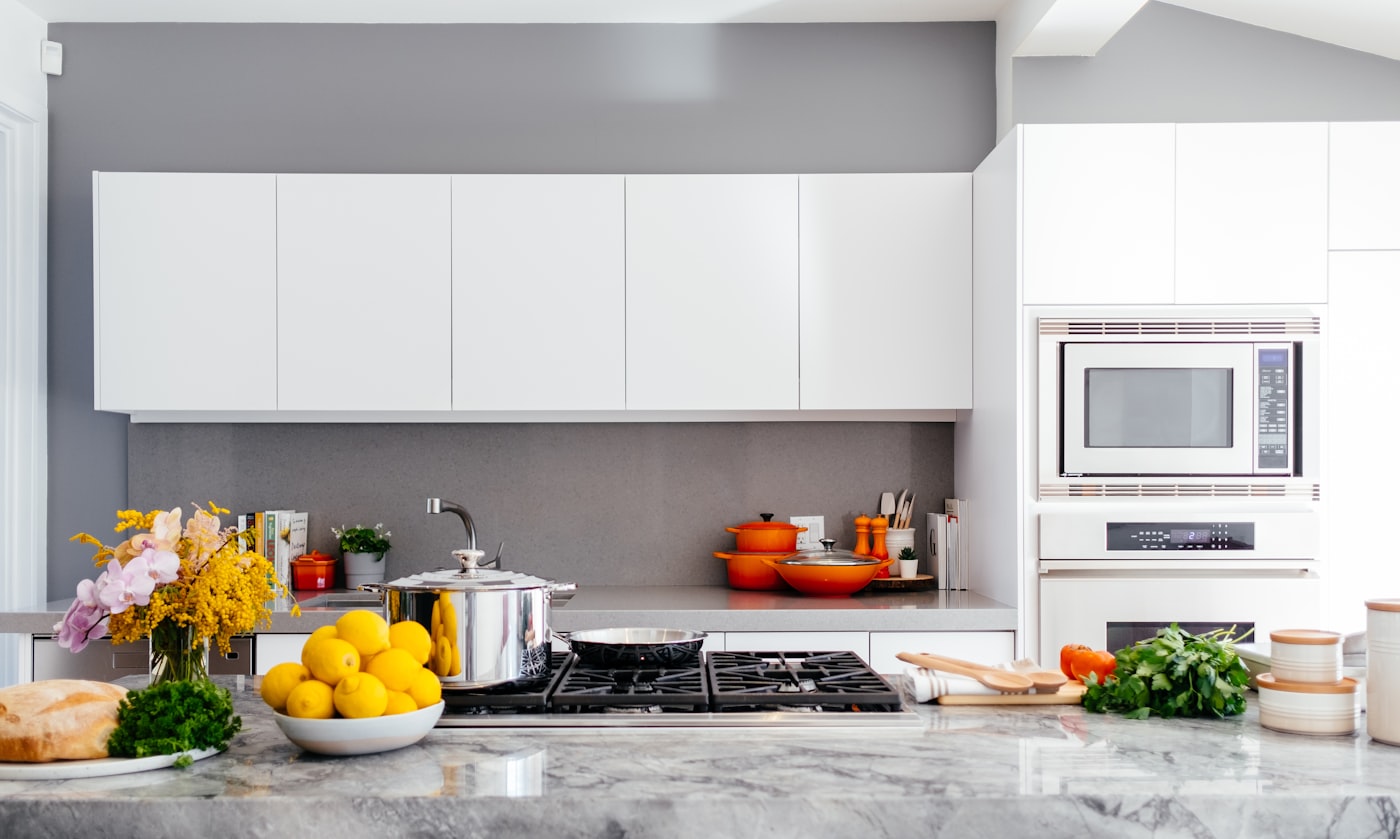
Even in compact layouts, you can name three working zones: hot (cook), cold (assemble, plate), and social (the edge where people lean in and chat without blocking the stovetop). When guests arrive, the social zone can slide outward—an island, a bar cart, a slim console—if you already have clear boundaries for the hot zone. Confusion in hosting usually comes from people standing where someone needs to be working, not from a lack of “style.”
If a guest is standing between you and the oven twice in one night, the layout did not change — your signaling should: lights, a bowl of snacks, a chair that says “please sit here.”
Light that makes the room and the food look generous
Build light in three layers at minimum. Ambient: soft, even, low-glare. Task: a crisp pool over key surfaces. Accent: a narrow beam for texture—tile, a bowl of citrus, a row of glassware. The secret for entertaining is to keep the ambient layer warm and quiet (often 2400–3000K for taste-driven spaces), and let task light handle precision. A dimmer is not a luxury; it is a crowd-control tool that turns a kitchen from “workplace” to “living room for adults.”

Tools and “set-down” zones (the honest version)
Buy fewer single-purpose gadgets and invest in clear set-down surfaces: a big tray for drinks, a heat-safe mat for hot pans, a small stack of good cloths that you are not afraid to use. A tiny cutting board is a bottleneck; two medium boards in rotation keep prep flowing. You do not need to impress anyone with a complicated knife collection—sharp, predictable, and dry between tasks is what professionals optimize for, and you can do the same at home.
- Keep the first hour “hands-free” for you: a pitcher of water, olives, or bread already placed.
- Reset surfaces between acts of the night—wipe, stack, and turn lights down a notch.
- End well: a labeled leftover station saves friendships and your fridge.